

When people talk about criminal justice reform, too often the conversation stops at policing or sentencing. But if we want to shift outcomes for individuals caught between addiction, incarceration, and homelessness, we need programs that bridge the gap from jail to community. That’s precisely the promise, and growing success, of the partnership between Vegas Stronger and the Clark County Detention Center (CCDC) through our Post-Release MAT (medication-assisted treatment) initiative.
At its core, this is a “warm hand-off” post-release model. Rather than releasing someone with a substance use disorder (SUD) to the streets and expecting them to navigate recovery alone, Vegas Stronger staff partner with CCDC to:
Build rapport while inside the detention center — Meet incarcerated individuals struggling with addiction before release.
Provide transportation to treatment immediately after release — No gap in care.
Offer whole-patient wraparound services — Clinical care, mental health counseling, case management, housing support, vocational assistance, peer coaching, and more.
Sustain treatment through outpatient programming — Vegas Stronger uses a “comprehensive outpatient experience (COPE)” integrating MAT with therapy, relapse prevention, trauma care, etc.
The program is completely voluntary for those who opt in during incarceration or upon release. This is not just about prescribing medication. It’s about aligning the medical stabilization with deeper supports to address root causes, co-occurring mental health conditions, and the structural barriers that lead people back to jail.
Since its inception, the program has:
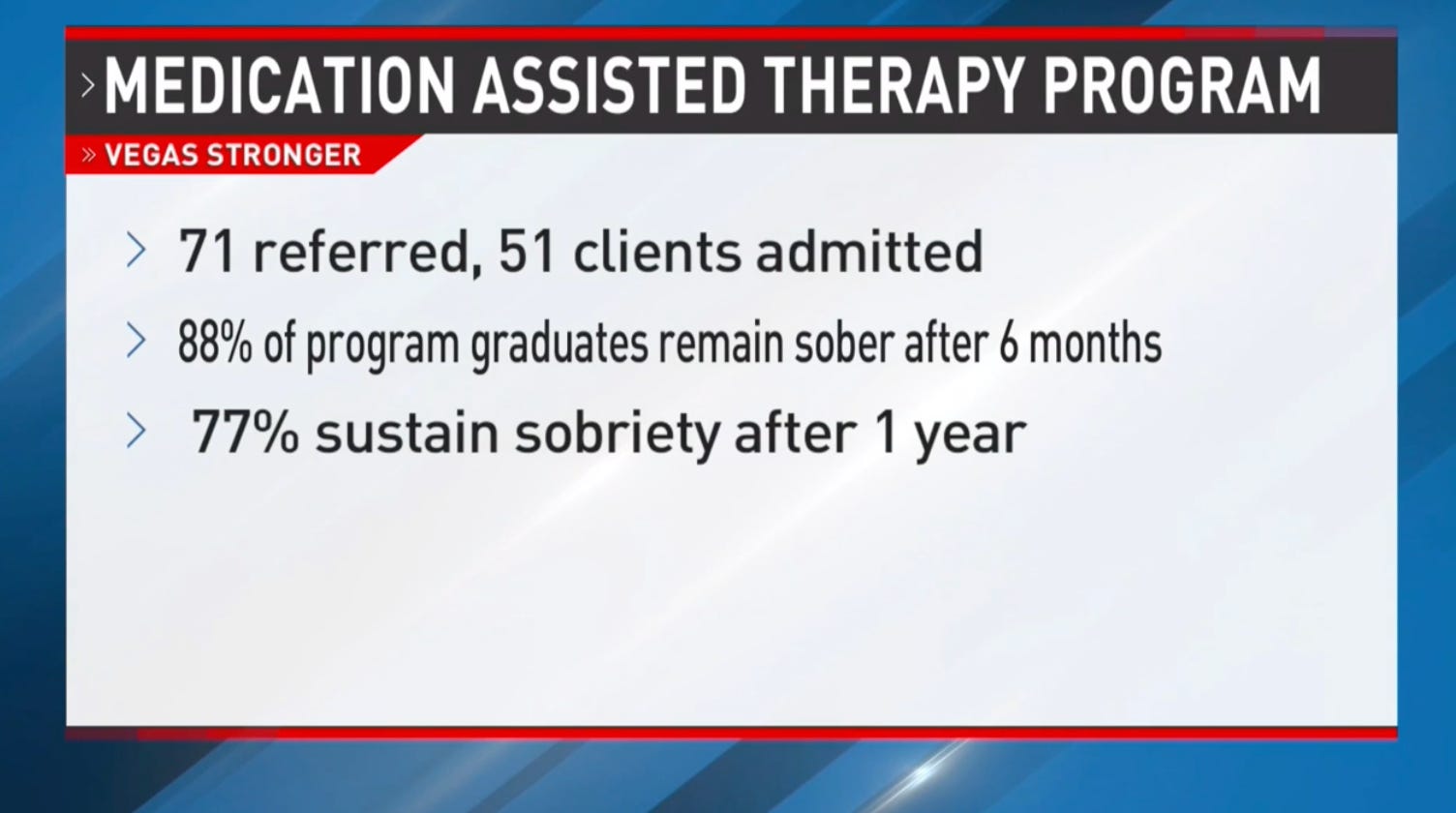
• Served 74 individuals referred through CCDC, with 51 clients admitted and an active engagement rate of 62.7%.
• Provided a total of 2,475 days in treatment, with an average length of stay of 48.5 days per participant — a figure expected to increase as the program matures.
• Achieved preliminary research outcomes showing 88% of program graduates remain clean and sober after six months, and 77% sustain sobriety after twelve months.
Other jurisdictions watching this model will find it compelling because it addresses the “release cliff” — the moment when someone exits incarceration and is most vulnerable to relapse, overdose, or reoffense. Vegas Stronger’s approach offers a replicable blueprint: entry while inside, hand-off at release, and sustained support in the community. Local news has highlighted our program repeatedly over the past few weeks:
Watch “Unique Approaches to Solving Homelessness, as Needs Arise”
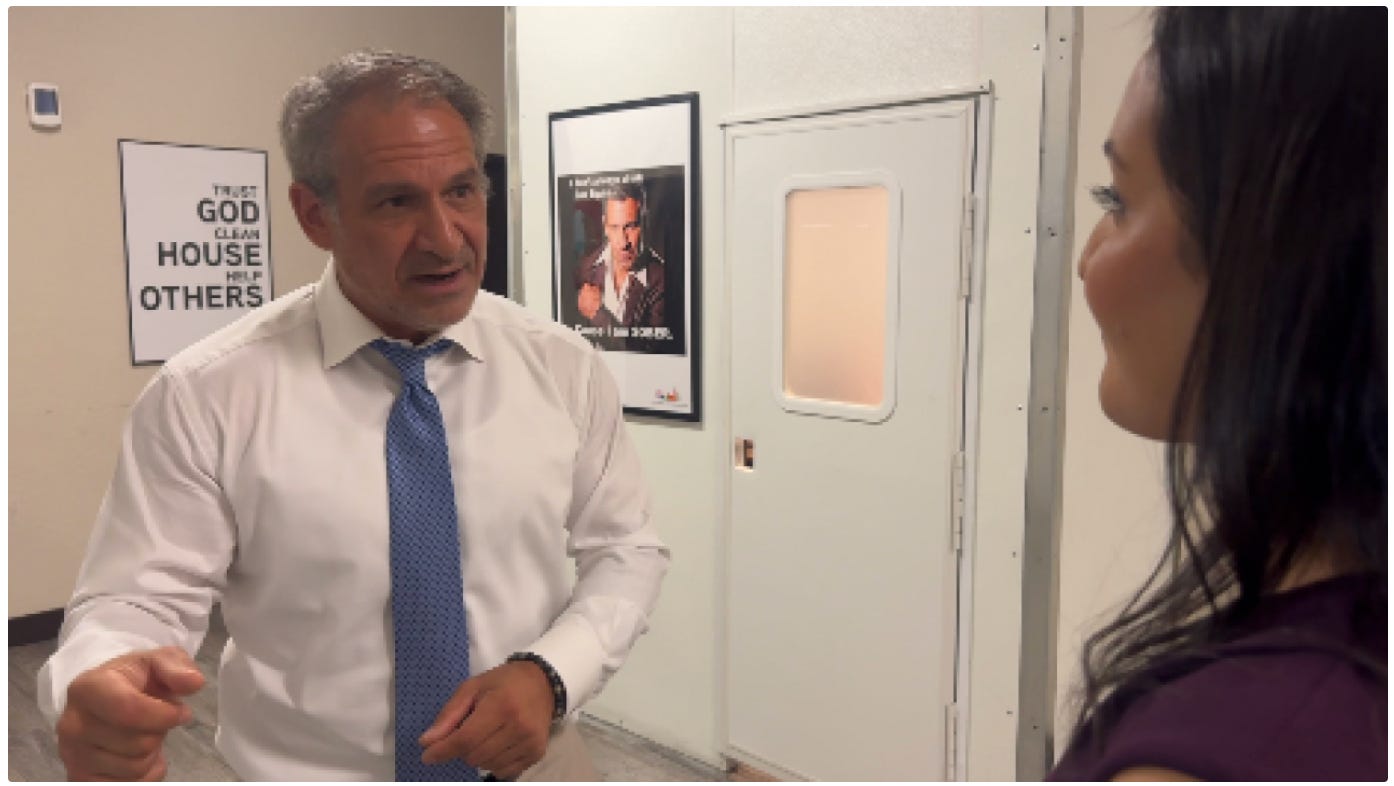
Watch “How LVMPD and partners are working to break the cycle of incarceration and addiction”
Watch “Locked up to liberated: How a new, local program aims to break the cycle of incarceration and addiction”
Vegas Stronger System of Care

While the partnership between Vegas Stronger and the Clark County Detention Center (CCDC) has drawn attention for its impact on recidivism and relapse prevention, it’s part of a much broader framework: the Vegas Stronger Continuum of Care. This continuum recognizes that sustained recovery requires more than just one treatment phase or medication — it demands a coordinated, holistic system that addresses both the biological and behavioral dimensions of addiction.
At the heart of the continuum is an Integrated Treatment Approach for Substance Use Disorders (SUDs) that brings together four evidence-based modalities: Motivational Interviewing (MI), Medications for Addiction Treatment (MAT), Contingency Management (CM), and Cognitive Behavioral Therapy (CBT). Each plays a unique role within Vegas Stronger’s model, meeting people where they are in their recovery journey.
Together, these pillars form a continuum — not a series of isolated interventions. Vegas Stronger integrates counseling, medication, case management, housing, and vocational support into a single recovery arc. Every phase — from jail intake to long-term outpatient care — connects through shared data systems, peer navigation, and multidisciplinary teamwork.
This model honors the truth that addiction recovery is not linear, and that relapse doesn’t mark failure but signals where additional support is needed. By combining medical, psychological, and social interventions, Vegas Stronger is demonstrating what it means to build a community recovery ecosystem — one that saves lives, reduces crime, and restores dignity.